About Old Gamboa Road
Old Gamboa Road and the Summit Ponds are in Soberanía National Park, about half an hour from Panama City and fifteen minutes from Gamboa. The entrance is across from Summit Nature Park, whose open areas and walkways are also good for birding.
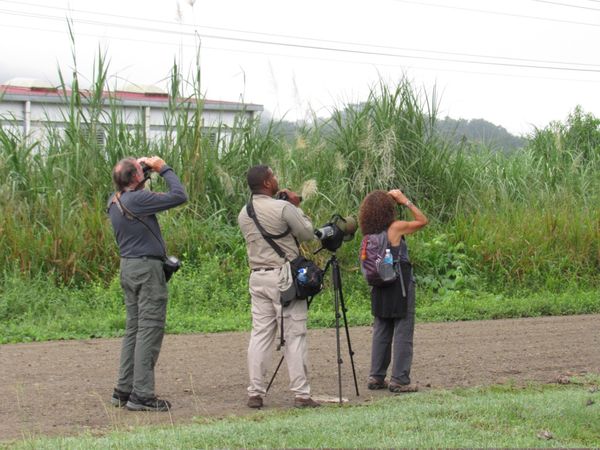
We walk about 2 km of dry forest, scrub and grassland, the best place in the Canal area for birds of these habitats, and step into small side trails along the way. At the ponds we look for herons, kingfishers and other water birds.
Because the habitat is open, birds are much easier to spot than in the dense forest of Pipeline Road. Beginners love it; experienced birders come for specialties like Jet Antbird and Pale-eyed Pygmy-Tyrant.
What to expect
With an early start, expect to see 55 to 75 species by noon. On a full day, a final count of 85 or more is common.
Combine it: Old Gamboa Road is 15 minutes from Pipeline Road and Plantation Road, so it pairs well with either on a full day.
Birds to look for
This list comes from our own tours, plus sightings shared by friends and clients. It changes all the time, so send us your sightings at info@guidedbirdtours.com. For everything else, see the Central Panama bird list.
Specialties
- Jet Antbird
- Pale-eyed Pygmy-Tyrant
- Lance-tailed Manakin
- Rosy Thrush-Tanager
- White-winged Becard
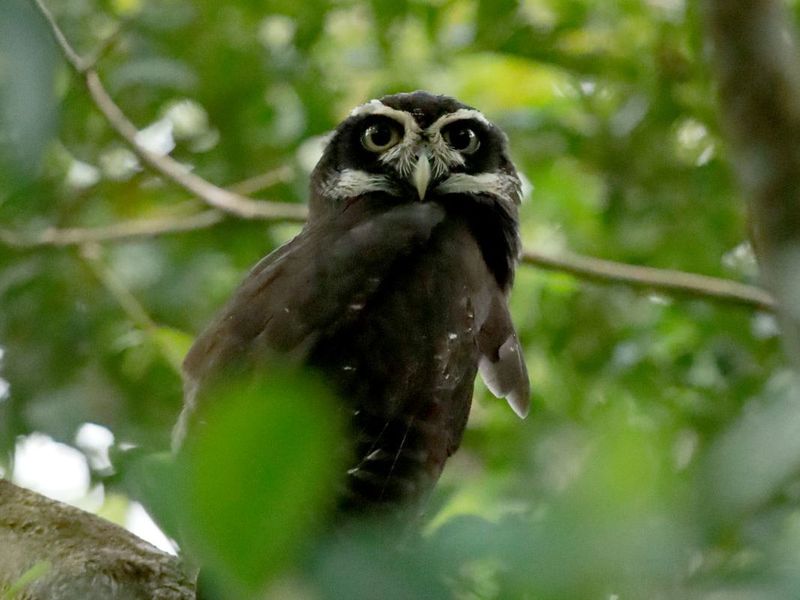
- Spectacled Owl
- Great Antshrike
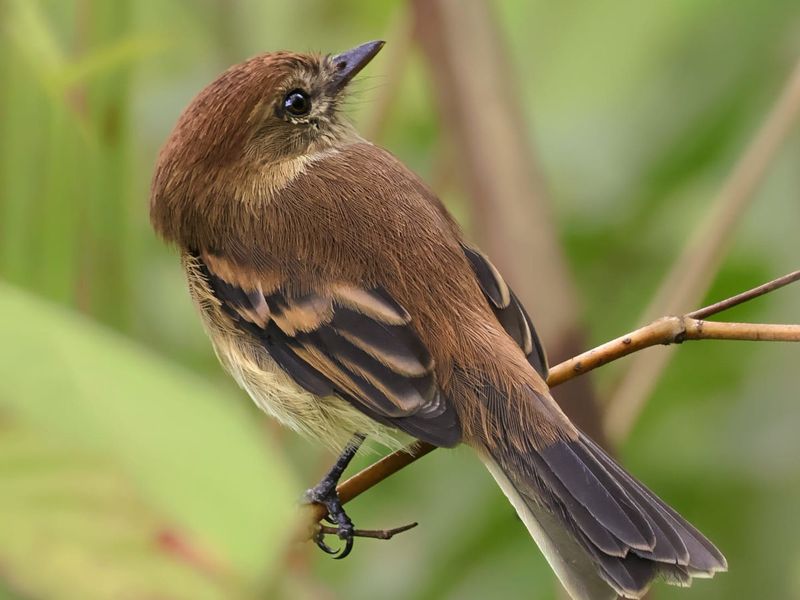
- Bran-colored Flycatcher
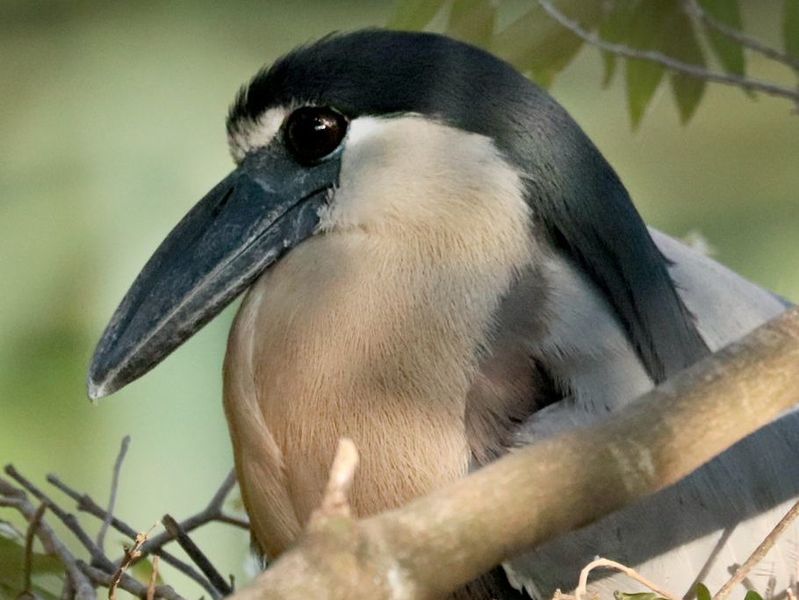
- Boat-billed Heron
- Capped Heron
- American Pygmy Kingfisher
- Blue Ground Dove
Also look for
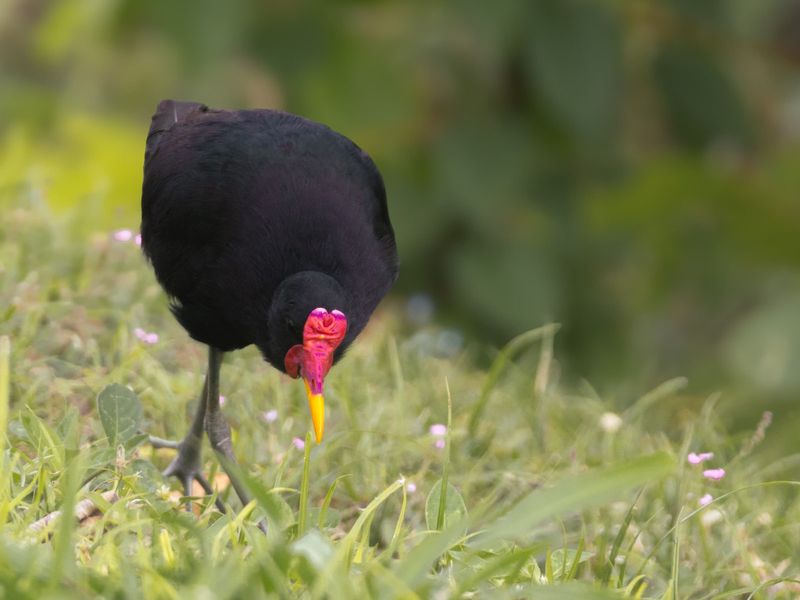
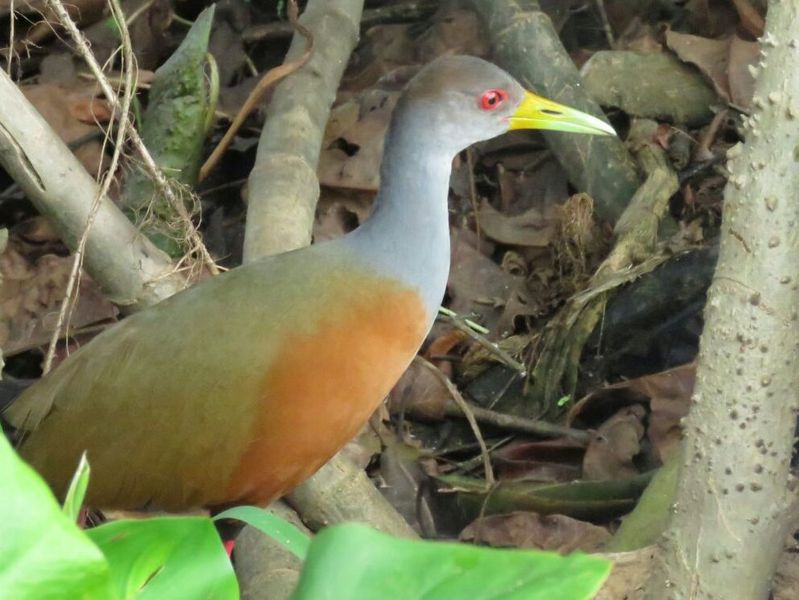
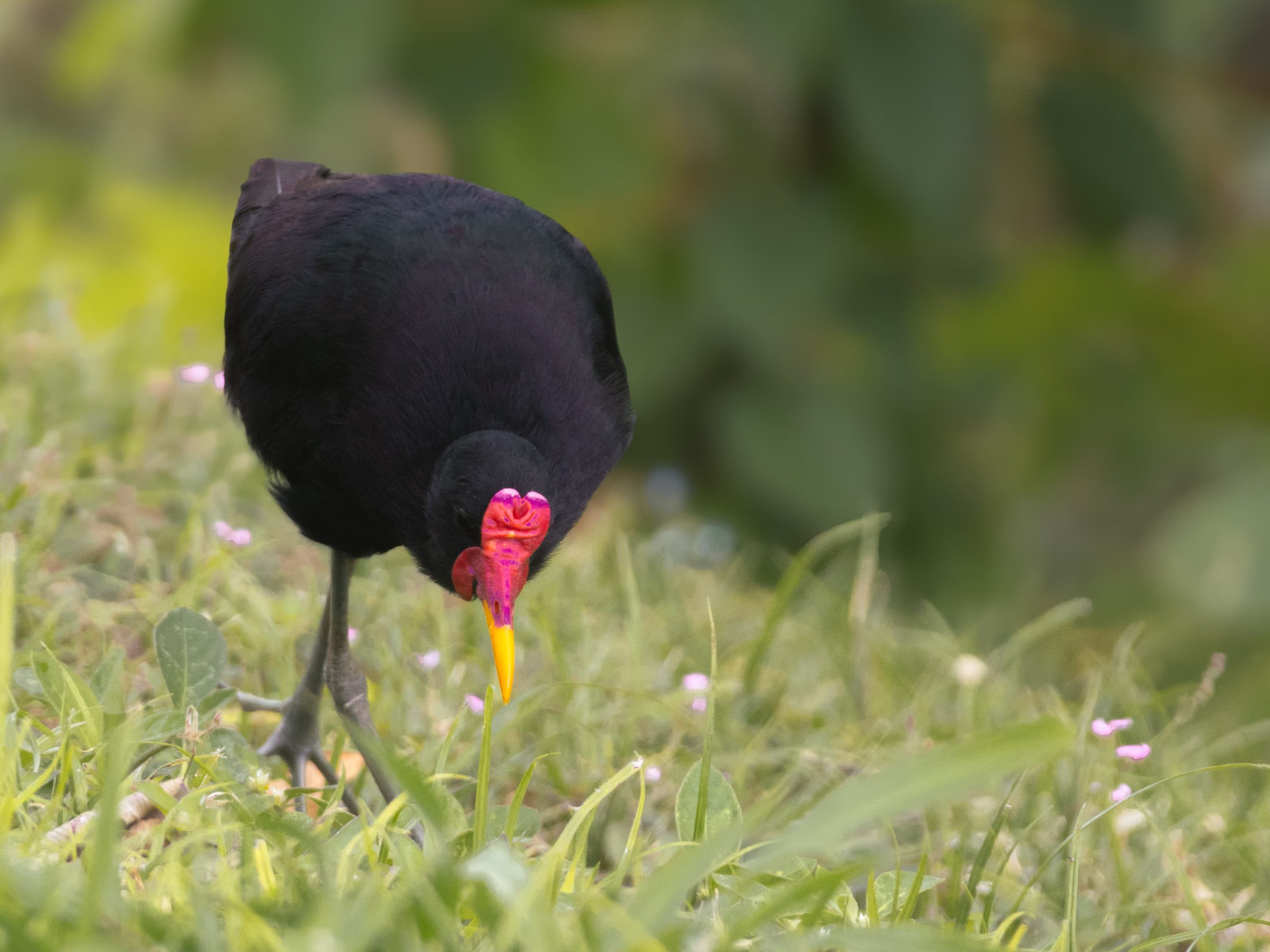
- Gray-cowled Wood-Rail
- Rufescent Tiger-Heron
- Green Heron
- Bat Falcon
- Gray Hawk
- Pale-vented Pigeon
- Ruddy Ground Dove
- Gray-chested Dove
- White-tipped Dove
- Orange-chinned Parakeet
- Red-lored Amazon
- Pheasant Cuckoo
- Squirrel Cuckoo
- Rufous-tailed Hummingbird
- Slaty-tailed Trogon
- Ringed Kingfisher
- Amazon Kingfisher
- Green Kingfisher
- Spot-crowned Barbet
- Keel-billed Toucan
- Collared Aracari
- Red-crowned Woodpecker
- Lineated Woodpecker
- Long-tailed Woodcreeper
- Plain Xenops
- Barred Antshrike
- Fasciated Antshrike
- Bare-crowned Antbird
- Chestnut-backed Antbird
- White-necked Puffbird
- Black-breasted Puffbird
- Tropical Kingbird
- Social Flycatcher
- Sulphur-bellied Flycatcher
- Streaked Flycatcher
- Sepia-capped Flycatcher
- Panama Flycatcher
- Yellow-bellied Elaenia
- Northern Bentbill
- Black-headed Tody-Flycatcher
- Yellow-green Tyrannulet (endemic)
- Purple-throated Fruitcrow
- Masked Tityra
- Golden-collared Manakin
- Buff-breasted Wren
- Rufous-breasted Wren
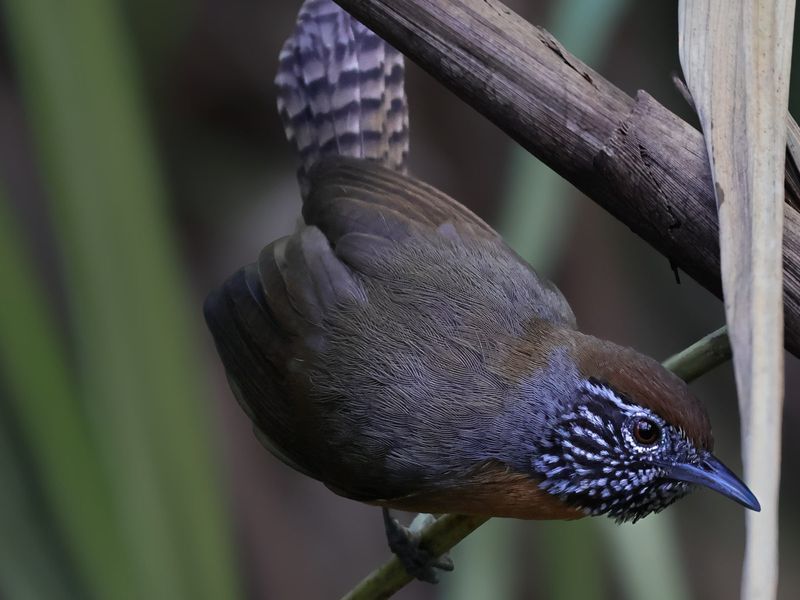
- Bay Wren
- Black-bellied Wren
- Stripe-breasted Wren
- Clay-colored Thrush
- Tropical Gnatcatcher
- Yellow Warbler
- Bay-breasted Warbler
- Northern Waterthrush
- Acadian Flycatcher
- Baltimore Oriole
- Blue Dacnis
- Thick-billed Euphonia
- Plain-colored Tanager
- Golden-hooded Tanager
- Palm Tanager
- Blue-gray Tanager
- Flame-rumped Tanager
- Crimson-backed Tanager
- Red-crowned Ant-Tanager
- Red-throated Ant-Tanager
- White-shouldered Tanager
- Gray-headed Tanager
- Streaked Saltator
- Buff-throated Saltator
- Ruddy-breasted Seedeater
- Variable Seedeater
- Yellow-faced Grassquit
- Yellow-tailed Oriole
- Scarlet-rumped Cacique
- Yellow-rumped Cacique
What have we seen lately? Our guides log their sightings on eBird, the bird-checklist database run by the Cornell Lab of Ornithology. See our recent checklists from Old Gamboa Road & Summit Ponds and the rest of Panama.
Practical information
Weather
Usually warm: mornings in the 70s °F (21–26 °C), afternoons in the 80s (27–32 °C), sometimes the low 90s (33 °C) and humid at midday. Rain can come any time, most often in the rainy season (about May to early December). We bird in the cooler hours, when birds are most active.
What to wear
Light clothing in earth colors, long pants (better than shorts), hiking shoes, a hat and a poncho. Bring insect repellent and sunscreen, and be ready for rain.
What to bring
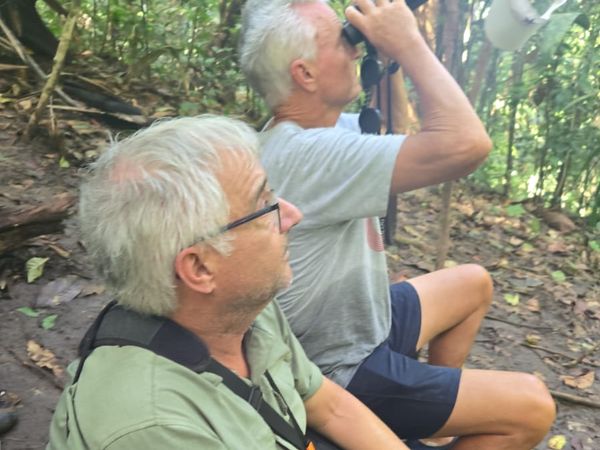
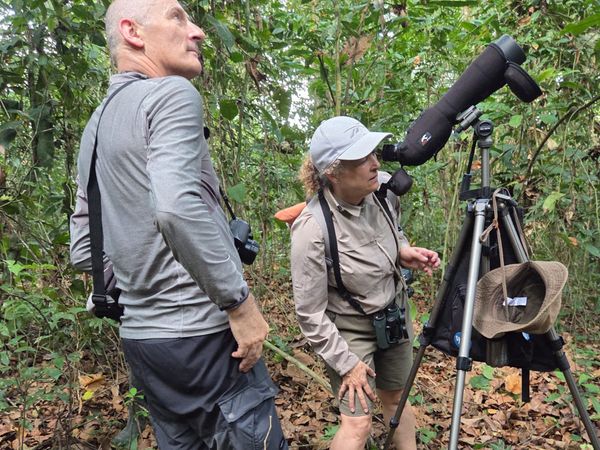
Binoculars, a notebook and a camera if you like. Your guide carries a spotting scope and a field guide, and we bring drinking water.
Staying nearby
Gamboa (10 minutes away) has small family-run B&Bs and the Gamboa Rainforest Resort; Panama City is 30 minutes away. Ask us and we will help with the booking.
Food
For lunch we offer El Encanto de Gamboa, a local fonda-style cafeteria in Gamboa, or the lobby restaurant or buffet at the Gamboa Rainforest Resort. Each traveler pays for their own meal.
Field guides we recommend
The Birds of Panama: A Field Guide by George Angehr and Robert Dean (2010), the main reference for Panama. An Illustrated Field Guide to the Birds of Panama by Ernesto Ponce and Giselle Muschett (2006), handy for quick checks.